Findings uncovered during the 2025 excavation season at Sefertepe add an important new layer to ongoing research into how this Neolithic settlement was used by the communities who once lived here. Newly identified carved human faces, a double-sided anthropomorphic bead, an incised animal depiction and a group of human skulls offer fresh insights into Sefertepe's symbolic and ritual expressions.
👉 For 2025 excavation updates from Göbeklitepe, Karahantepe and Çakmaktepe,click here.
Carved Human Faces: A Distinctive Stone-Carving Tradition at Sefertepe
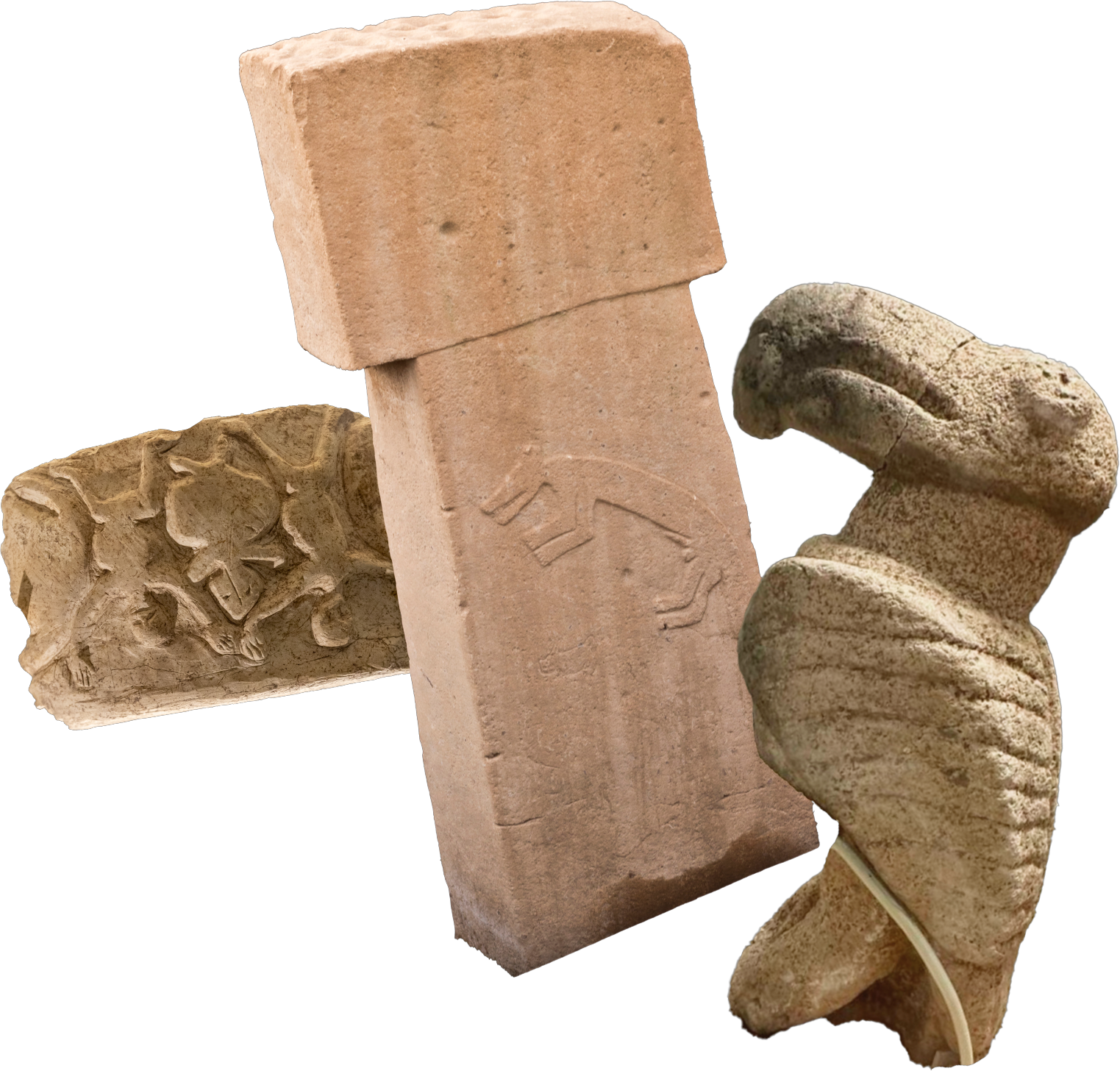
One of the most striking discoveries of the 2025 season is a pair of carved human faces found in an area interpreted as a specially arranged platform. The faces were carved on four limestone blocks, one in high relief and the other in a lower relief technique. Their stylistic features differ noticeably from examples known at Göbeklitepe, Karahantepe and Sayburç.
Both faces appear to be oriented north. The eastern block preserves a nearly complete head. The eyes and pupils are clearly defined, the nose and mouth are rendered with sharp contours and the ears are delicately shaped. A thin line running across the top of the head suggests a headband or hairline.
The western face, carved partially beyond the block, presents a half-figure with closed or downward-looking eyes, a pronounced nose and full lips reminiscent of certain carved heads known from Karahantepe.
The fine-grained limestone and the precision of the carving underline the high degree of craftsmanship achieved at Sefertepe.

Double-Sided Anthropomorphic Bead
Sefertepe is well-known for its small finds, and the 2025 season added an exceptional example to this repertoire: a double-sided anthropomorphic bead carved from black basalt.
A central perforation divides the bead into two carved faces.
On one side, the facial features are compressed into a smaller surface. One eye has upper and lower lines, while the nose is emphasized by lines extending toward the stone's edge. Diagonal marks on both sides of the face highlight the contours.
The opposite face exhibits a more regular carving style. The brow ridges and nose are clearly defined, the eyes are indicated through linear incisions and two diagonal lines extending from the tip of the nose create a repeated motif shared by both faces.
This bead adds a new dimension to Sefertepe's symbolic and small-object production.

Incised Depiction of a Juvenile Wild Boar
Another significant discovery of the 2025 season is an incised depiction of a juvenile wild boar found on the reverse side of a heavily used grinding stone. The surface appears to have been deliberately used as a drawing plane, with the animal rendered in fine, linear incisions.
The head is detailed; the eyes, mouth, ears and short mane are all clearly identifiable. The forelegs and hooves are emphasized with sharp lines. The body spans much of the stone's surface, while the tail and body separation are expressed with more stylized strokes toward the rear.
The technique closely resembles incised wild equid depictions previously documented at Karahantepe, suggesting a shared artistic or symbolic tradition across the Tas Tepeler region.
ukRk.jpg)
The Skull Room: 12 Newly Identified Human Skulls
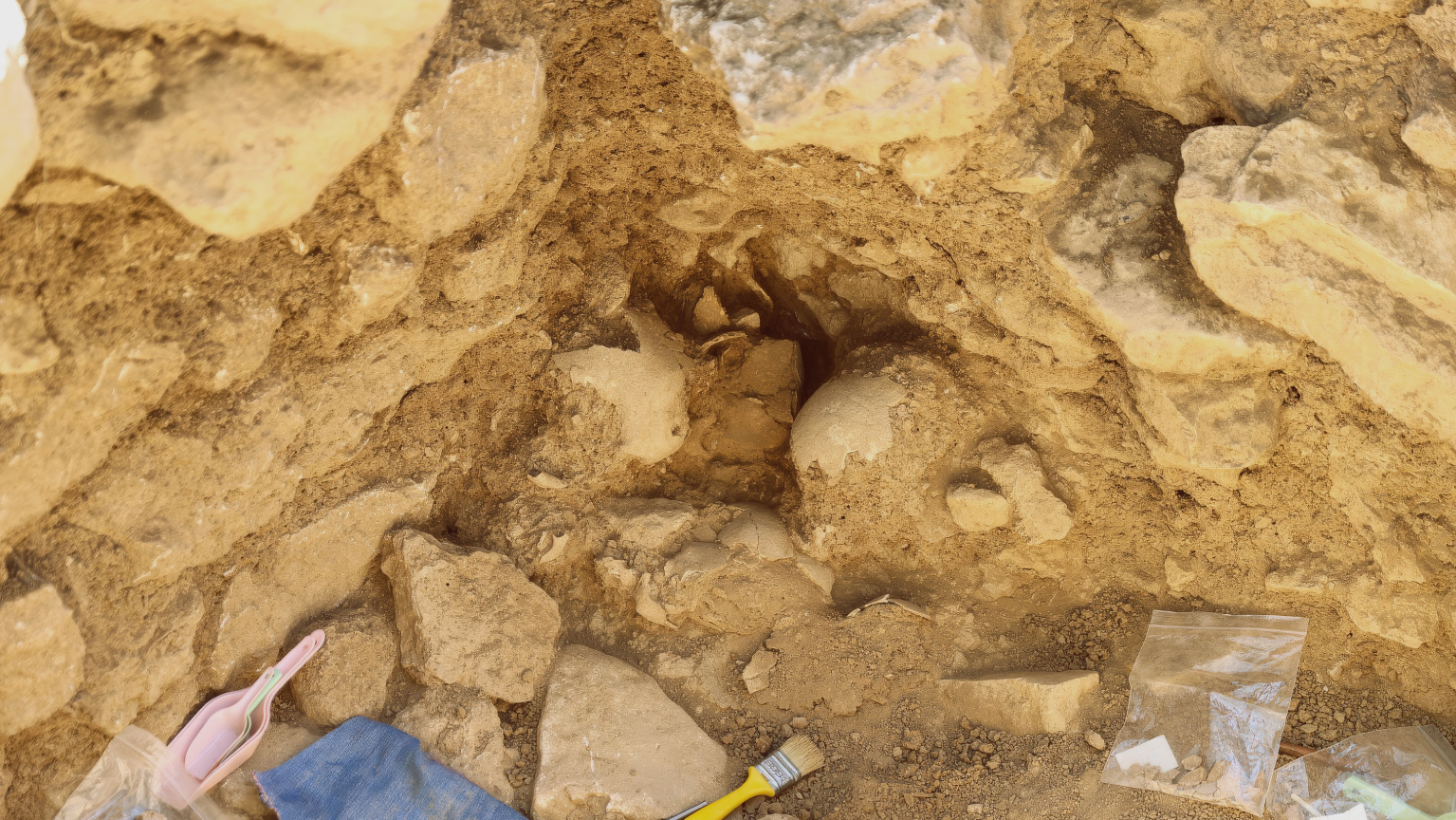
The "skull room" identified in the 2024 excavation season yielded new discoveries in 2025. Eight additional skulls dated to around 10,500 years ago were identified within the same chamber. A nearby cell produced four more examples, adding to the 31 skulls recorded last year.
Anthropological analyses indicate that the skulls belong to individuals of various ages, ranging from an infant of approximately six months to fully grown adults. This diversity provides valuable clues about how the space may have been used.
This season, excavations in the special building associated with the skull niche reached the bedrock floor. Evidence shows that the bedrock had been intentionally leveled, and a series of neatly cut pits were identified. These features are expected to contribute to new interpretations of the structure's function.
For verified information from excavation directors and rich visual content on the Tas Tepeler sites, explore the Stone Mounds app.