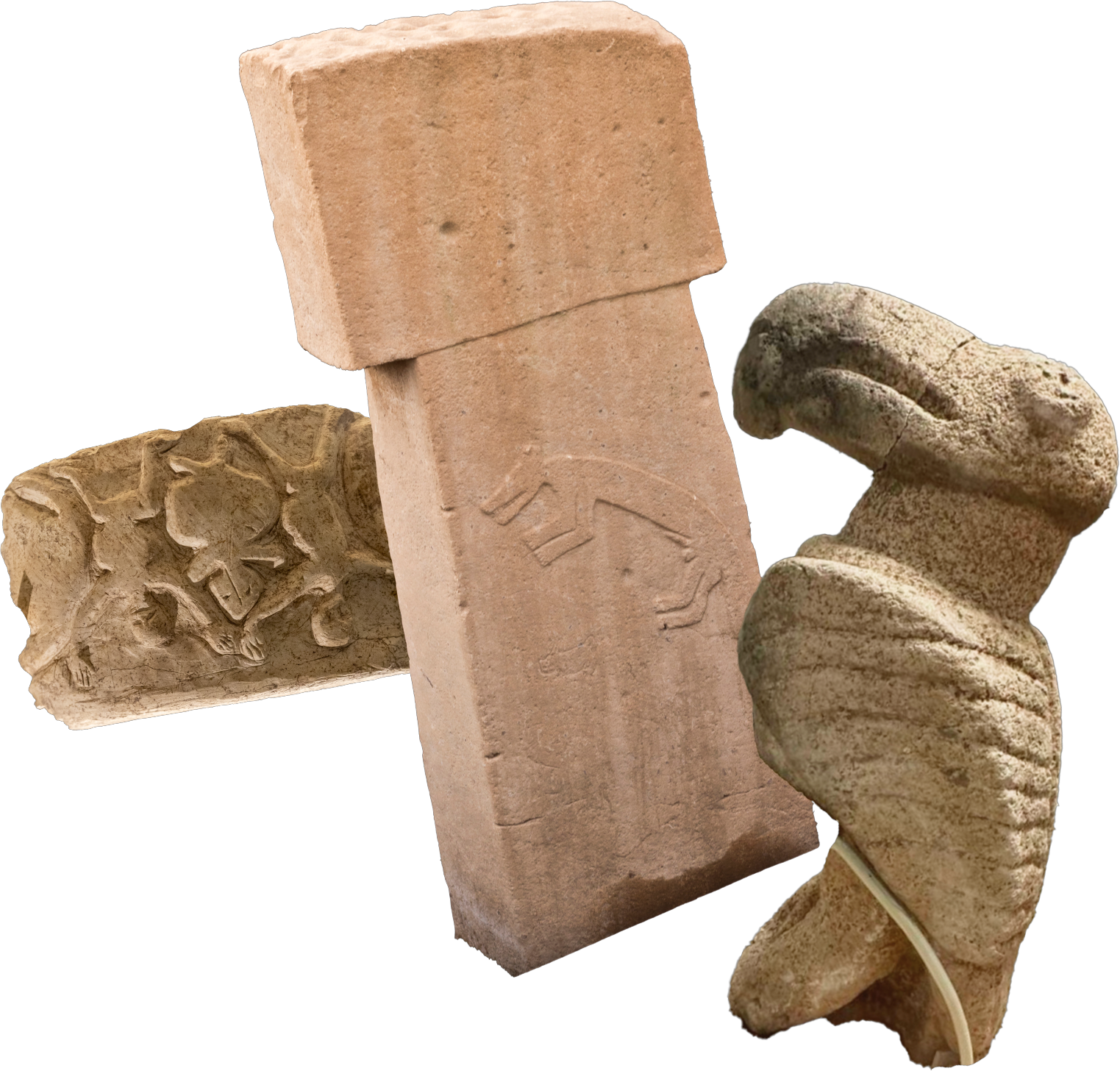
Why would a community go through the effort of building monumental structures only to deliberately bury them?
At Karahantepe, this question continues to fascinate archaeologists and visitors alike. The site's communal buildings, filled with striking carvings and symbolism, offer a rare glimpse into how some of the last hunter-gatherer communities lived. But one mystery stands out: many of these structures appear to have been intentionally buried.
How do we know they were buried?
Archaeologists, including Dr. Necmi Karul, have uncovered several clues suggesting that this was no natural process.
In one of the largest structures, the soil used to fill the building slopes in the opposite direction from the surrounding ground, something that wouldn't happen naturally. Even more intriguing, everyday objects like plates and vessels were left behind inside. Together, these details strongly suggest that people deliberately filled the structure with soil.
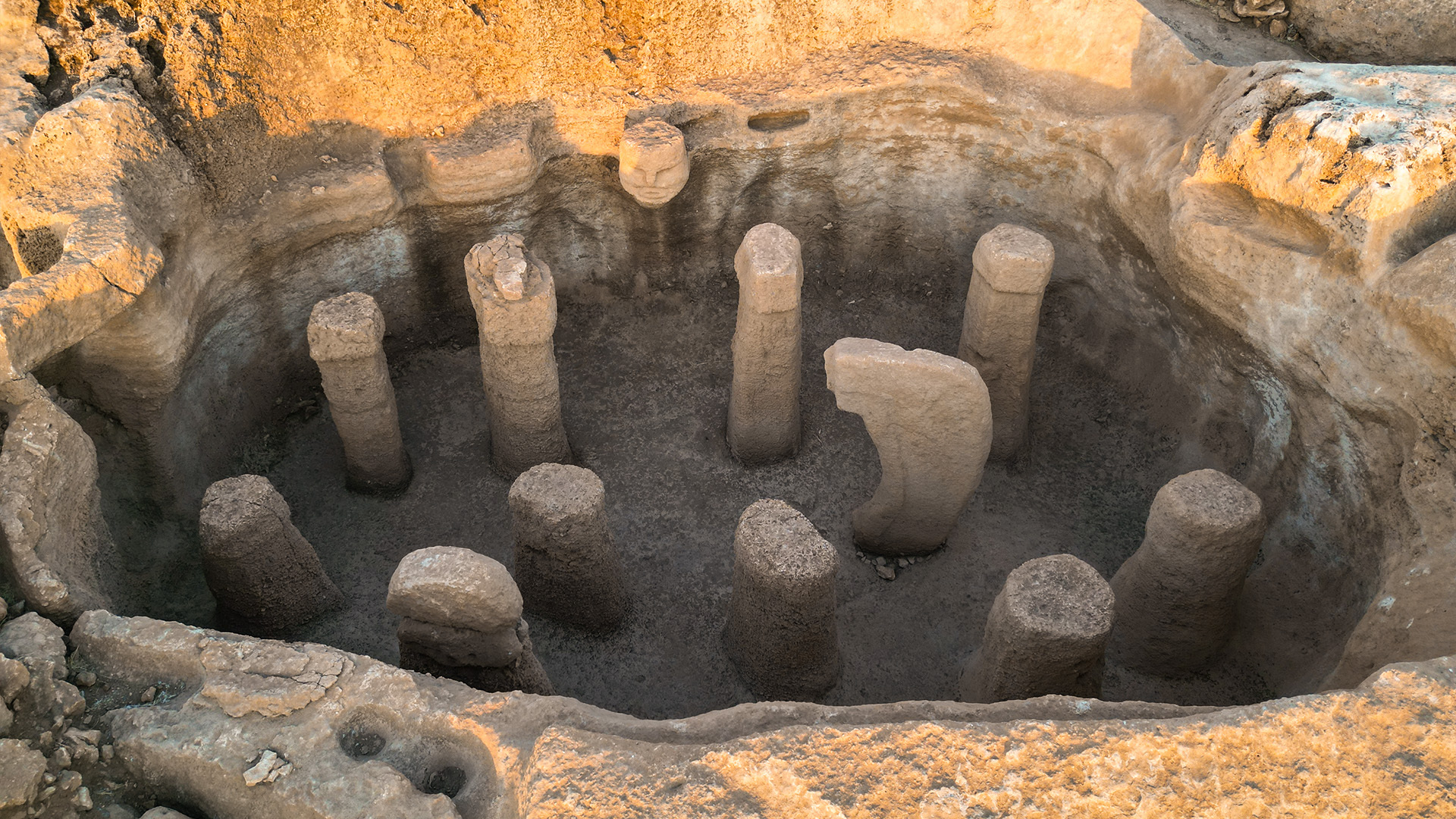
In another communal space, famous for its 11 human-sized, phallus-shaped pillars, careful excavation revealed even more. By studying cross-sections of the soil, researchers found a tightly packed layer of large stones. These stones don't appear anywhere outside the structure and were placed directly on top of the pillars.
Such an arrangement couldn't be the result of erosion. Instead, it seems intentional, almost as if the builders were marking or preserving the memory of what stood there.
How did they do it?
Burying these structures was no small task.
The buildings were filled with layers of soil, stones, and other materials. Considering the size of these spaces, this process would have required a huge amount of labor and time. This wasn't a quick or practical act; it was something done deliberately and likely with meaning.
Why bury them at all?
One leading idea is that these buildings had a kind of "life cycle."
Archaeologists suggest that constructing a building may have symbolized its "birth," while burying it marked its "death." In this sense, the structures weren't just functional spaces; they may have been seen as living parts of the community, much like people, animals, or natural cycles observed by these early societies.
If this is true, then burying a building wasn't destruction; it was a meaningful, possibly even ceremonial act.
What happened afterward?
Interestingly, people didn't abandon the area after these burials.
Instead, they continued to live nearby, building new spaces in the surrounding landscape. Notably, they avoided constructing directly on top of the buried structures. This suggests that these places remained important, perhaps even sacred, long after they were filled in.
6lFl.jpg)
A mystery still unfolding
The idea that the people of Karahantepe intentionally buried their own buildings is still debated. But the evidence uncovered so far points strongly in that direction.
What's clear is this: these structures mattered. They took immense effort to build and just as much effort to bury. Whatever the reason, this practice tells us that these early communities had complex beliefs and rituals that we are only beginning to understand.
As excavations continue, Karahantepe may yet reveal more about this remarkable and mysterious tradition.
Explore More
The Neolithic Period still holds many mysteries. If you're curious to explore them further:
👉 Check out our article: Was Göbeklitepe a Temple?
For more on Göbeklitepe, Karahantepe, and other sites in the Taş Tepeler Region,
📲 Download the Stone Mounds app.